
ColumbusBreaking news
Cruz and Jack Smith Clash Raises a Bigger Question, Who Holds America’s Justice System Accountable?
Sen. Ted Cruz’s heated questioning of former Special Counsel Jack Smith has renewed debate over prosecutorial power and government accountability. But the larger issue reaches far beyond Washington how America protects judicial independence while ensuring that people who have completed their sentences have a meaningful opportunity to rebuild their lives.
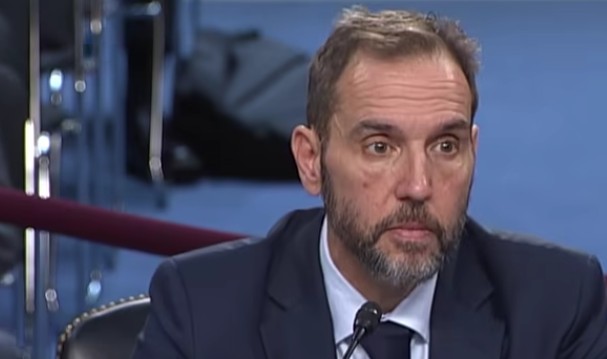
The heated confrontation between U.S. Sen. Ted Cruz and former Special Counsel Jack Smith was about more than one investigation, one prosecutor or one political figure. It raised a larger question about power, accountability and public confidence in the American justice system.
During the September 29 Senate Judiciary Committee hearing, Cruz accused Smith of an “egregious abuse of power” in connection with investigations involving President Donald Trump and Republicans. Smith defended his work and rejected accusations that his actions were politically motivated.
But the conversation should not stop with Jack Smith.
The same principles of accountability should apply throughout the American justice system from the Department of Justice and federal prosecutors to attorneys general, state prosecutors and courtrooms across the country.
A judge is not a prosecutor.
Judges are expected to remain independent and impartial. Federal judicial ethics rules specifically state that judges should not allow political, social, financial or other relationships to influence their judgment.
That separation is essential.
When a judge sits behind the bench, the responsibility is to apply the law fairly not to become part of the prosecution team, protect political interests or allow professional relationships to determine what happens inside the courtroom.
Allegations of favoritism, undisclosed conflicts, improper communications or abuse of authority must be supported by evidence before they are treated as established facts. But credible evidence of misconduct should never be ignored simply because the individual involved holds a powerful position.
Accountability cannot be reserved only for high-profile political cases.
Ordinary Americans deserve the same protection of their constitutional rights.
There is also another serious problem within the American criminal justice system that deserves greater attention: what happens to people after their punishment is supposedly finished.
A person can serve years in prison, complete parole or post-release supervision, return to the community, obey the law and attempt to rebuild a productive life yet continue carrying a criminal record that can affect employment, housing, professional licensing and other opportunities.
The prison sentence may have ended, but the consequences can continue for years.
The Department of Justice itself has recognized that people with criminal records can face substantial barriers to employment, housing, education and successful reentry.
That creates an important question for lawmakers throughout the country:
When has a person truly paid the debt to society?
If someone completes the sentence imposed by the court, remains law-abiding and demonstrates rehabilitation, should that person continue being automatically disqualified from opportunities because of something that happened years or decades earlier?
There are occupations and circumstances where an individual's criminal history can legitimately be relevant to safety or the responsibilities of a particular job. But that is different from treating every conviction, every applicant and every situation exactly the same forever.
America cannot promote rehabilitation while simultaneously creating barriers that make rehabilitation harder.
If society expects formerly incarcerated people to work, support their families, obtain stable housing, pay taxes and avoid returning to crime, then lawmakers should seriously examine whether existing criminal-record policies actually support those goals.
This is where the Cruz and Jack Smith hearing becomes part of a much larger discussion.
When government officials possess enormous authority over another person's freedom, reputation and future, that authority must come with meaningful oversight.
Prosecutors must follow the law.
Judges must remain independent.
Government agencies must respect constitutional protections.
Credible allegations of misconduct must be investigated through appropriate independent processes.
And people who have served their sentences should have a realistic pathway toward rebuilding their lives.
This issue is bigger than Republicans or Democrats.
It is bigger than Jack Smith, Ted Cruz or Donald Trump.
It is about whether the American justice system can hold people accountable while also holding itself accountable.
Justice should impose lawful consequences when laws are violated. But a system that believes in rehabilitation must also provide a meaningful way for people who have completed their punishment to move forward.
The rule of law must apply on both sides of the courtroom.